


High quality, Low cost, Good service
-
Licensend Professionals
-
Quality workmanship
-
Satisfaction Guarantee
-
Dependable Service
-
Free Estimates
metal caps
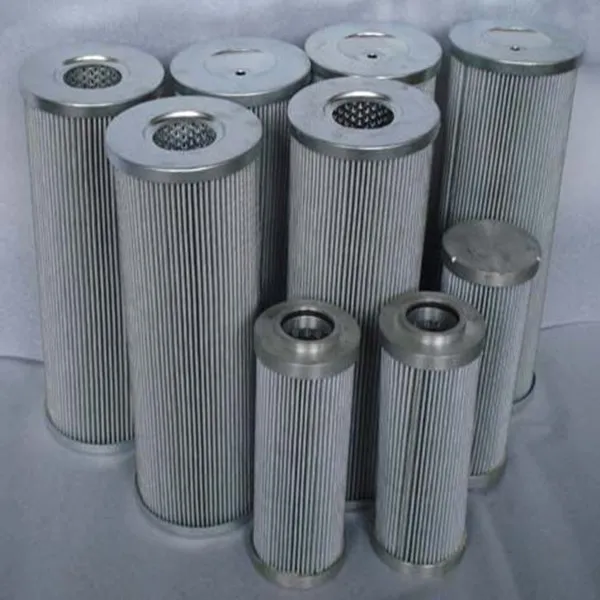
Metal Caps For Filters: the small parts that make or break your element If you live in the world of filter end caps , you know the job looks simple until it isn’t. A slightly warped cap, the wrong coating, or a sloppy adhesive bead—and suddenly the whole element fails a leak test. I’ve seen that movie. Origin note: Made in No.580 Gongnong Road, Shijiazhuang City 050000, Hebei, P.R. China. The product family here—Metal Caps For Filters—covers galvanized, anti-fingerprint steel, and plastic options for air, dust removal, oil, and fuel filters. What’s trending (and what buyers are asking for) Corrosion performance: anti-fingerprint galvanized steel with stable salt-spray hours is hot. Cleaner assembly: tighter stamping tolerances to reduce PU/epoxy consumption and squeeze-out. Lightweight builds: plastic caps for HVAC and EV thermal systems, but still plenty of metal for oil/fuel. Traceability: laser codes on filter end caps are now common—surprisingly even on mid-volume lines. Specs at a glance Product Metal Caps For Filters Materials Galvanized steel, anti-fingerprint steel, plastic (PP/ABS); stainless on request Thickness 0.3–1.0 mm (≈0.5 mm typical for oil/fuel); plastics ≈2.5–4.0 mm Diameter range 40–400 mm; custom dies available Coatings Zn, anti-fingerprint, optional powder coat; REACH/RoHS compliant Tolerances OD/ID ±0.15 mm; flatness ≤0.3 mm (real-world use may vary) Salt spray ≥120 h neutral (ISO 9227) for anti-fingerprint steel; options to 240 h Temperature -40 to 120°C metal; plastics up to 90°C continuous Process flow and testing Materials: coil-fed galvanized or anti-fingerprint sheet; plastics: PP/ABS. Methods: stamping/deep-draw → trimming/deburr → surface clean → optional coating → adhesive groove form → laser mark → 100% visual sort. Assembly compatibility: PU potting, hot-melt, or epoxy bead; groove depth typically 2.0–3.5 mm. Tests: dimensional CMM, flatness, burr height, adhesion (cross-hatch), salt spray (ISO 9227), and assembled element integrity (ISO 2942) and multipass (ISO 16889) where applicable. Service life: HVAC 1–3 years; engine oil filters up to OEM interval; industrial dust collectors ≈ 6–18 months depending on ΔP cycles. Sample data (anti-fingerprint steel): flatness 0.22 mm avg (n=30), neutral salt spray 168 h to white rust, adhesion GT0–GT1. Customers say the bead wet-out is “predictable,” which—honestly—is what you want. Applications and advantages Air/HVAC: lighter caps reduce strain on frames; plastic works well in MERV 13+ upgrades. Dust removal: rigid metal filter end caps prevent telescoping under pulsed ΔP. Oil/Fuel: anti-fingerprint metal resists handling stains and improves gasket adhesion. Advantages I’ve noticed in the field: less adhesive overfill, better concentricity, and fewer “mystery leaks” during bubble-point checks. Vendor comparison (quick take) Vendor Materials MOQ Lead time Certs Notable ANYA Filter Media Galv., anti-fingerprint, plastic ≈2,000 pcs 2–4 weeks (stock dies) ISO 9001; IATF 16949-ready (confirm) Tight groove control EU Supplier B Galv., stainless ≈1,000 pcs 1–3 weeks IATF 16949 Automotive PPAP depth Local Fabricator C Galv. ≈500 pcs 1–2 weeks ISO 9001 Fast prototypes, fewer coatings Customization and real-world notes Custom dies, emboss logos, in-groove gasket options, laser UID for trace. Private label kits shipped with matched adhesives to avoid cure surprises. Case 1: a compressor OEM cut leak rework by 38% after switching to tighter OD tolerance caps. Case 2: a steel mill’s dust collectors saw 12% longer life thanks to thicker-gauge top filter end caps resisting pulse fatigue. Customer voice: “The anti-fingerprint finish looks minor, but operators handle them cleaner and our bead is more consistent,” says a Midwest assembler. I’d agree. Standards and compliance Check your application spec: ISO 2942 (fabrication integrity), ISO 16889 (multipass), ISO 9227/ASTM B117 (salt spray), ISO 4548 (oil filter tests). For automotive, ask for PPAP and IATF 16949 alignment; for chemicals, confirm REACH/RoHS. Authoritative citations ISO 16889: Hydraulic fluid power—Filters—Multi-pass method ISO 9227: Corrosion tests in artificial atmospheres—Salt spray tests ISO 2942: Hydraulic filters—Verification of fabrication integrity ISO 4548 series: Methods of test for full-flow lubricating oil filters
-
-
2026-04-02 20:20
An air purifier for covid-19(HEPA Filter paper) -
-
2026-04-02 19:53
Fiberglass Media Filter—High Efficiency & Durable: Why? -
2026-04-02 19:12
Advanced Car Air Filter Paper - ANYA FILTER MEDIA CO., LTD